For seventy years, every new medium extended a human sense — television our sight, the internet our reach, social media our judgment. Artificial intelligence is the first that extends human thought itself: it generates ideas alongside us rather than simply carrying them. That single shift moves us out of McLuhan's connected Global Village and into something new — one continuous fabric of human and machine intelligence. The leaders who win the next decade will design for that shift, not debate it.
“The medium is the message.”
Marshall McLuhan · 1958
01 — Why now
Structural shifts become the new normal faster than we expect.
A decade ago, remote work was a rounding error — roughly one in twenty U.S. employees worked primarily from home. Then the ground moved. That transformation didn't take a generation; it took about five years. Offices, leases, and entire career expectations reorganized around a model that barely existed in 2015.
AI is following the same curve — only faster, and aimed at something far more central than where we sit. Remote work changed where we think. AI changes how we think, and increasingly who does the thinking. Treating it as an optional tool to evaluate quarter by quarter is the same mistake as the executives who, in 2018, were still certain real work only happened in the building.
1 in 20
Worked primarily from home, a decade ago
1 in 5
Remote at least part of the week, today
52%
Of remote-capable employees now work hybrid
~5 yrs
For that shift to fully normalize
02 — Core insights
Five takeaways from the paper.
I
AI breaks the pattern.
Every medium before it was a passive channel — television broadcasts, the internet connects. AI is the first medium that thinks with you. It synthesizes, decides, and creates. The output is no longer just delivered; it is generated. That makes it a different category of technology, not a faster version of the last one.
II
From the Global Village to One Global Mind.
McLuhan's Global Village was a model of connectivity — it linked people across distance, but the thinking still happened in individual human heads. One Global Mind is a model of cognitive integration: human insight and machine intelligence interweave into a single, continuous fabric.
III
From creators to curators.
Value moves away from producing every output and toward judgment — guiding, refining, and orchestrating intelligence that is no longer entirely our own. The premium is on knowing what to ask, what to keep, and what to trust.
IV
Collective capability, at a new scale.
Knowledge, decisions, and creativity become part of a connected global fabric — synthesized across the entire network at once, available at a scale no individual could reach alone. The constraint is no longer how many smart people you can hire; it's how well you orchestrate the intelligence you already have.
V
The plates are already moving.
We are crossing from the connective architecture of the Global Village to the integrated infrastructure of One Global Mind — and our measures of human value, economic contribution, and competitive edge will all be rewritten to match. The advantage belongs to those who stop reacting and start designing.
03 — The break
Why AI is not just the next tool.
Every medium before AI was a passive channel and the human mind was the only engine of thought in the room. AI changes the equation.
Before AI · Passive channel
With AI · Active agent
Role
Delivers, formats, and connects what humans create
Synthesizes, decides, and creates alongside humans
Cognitive effect
Reshapes how we focus and how fast we process
Automates analysis, reasoning, and creative work
The human's job
Sole author of every idea
Curator and orchestrator of human and machine output
System behaviour
A fixed pipeline we adapt to
A loop that learns and adapts to us in real time
04 — The pattern
Four extensions of human capability.
Each major medium of the last seventy years took a human capability and pushed it outward into the environment. Viewed in sequence, it is a steady outsourcing of ourselves — until the line breaks.
The Evolution of Human ExtensionsFig. 01
1950s — 1970s
1
Television
Extended our sight
The Global Village
1990s — 2000s
2
Internet & Email
Extended our reach
The Borderless Workspace
2010s — early 2020s
3
Social Media
Externalized our judgment
The Global Public Square
Mid-2020s & beyond
4
Artificial Intelligence
Extends our cognition
One Global Mind
Passive tools → Active agentsWhere the line breaks
05 — Operating implications
What this means for the people who run the organization.
Arguing about a single AI output is like judging television by critiquing one commercial. The leverage is in the environment it creates. Here is where that lands across the leadership table.
CEO & Board
Set strategy around the shift, not the artifact.
Stop evaluating AI answer by answer. Govern the structural change underneath — the way it reshapes how work is done — and build AI literacy now, while the rules are still being written.
COO
Redesign work in the open, with people.
Hand the repetitive and routine to the machine; free human time for judgment, creativity, relationships, and care. Competitive advantage moves from execution speed to orchestration. Done well, work gets more human, not less.
CHRO
Design a partnership, not a headcount plan.
The central question shifts from who does which task to how people and intelligent systems make each other better. Redesign roles alongside employees so the story becomes elevation, not replacement.
CIO
Treat AI as an active medium, not a tool.
This is not another item in the stack. Design the loop where human judgment and machine capability combine and adapt to each other in real time — and make it the core competency of the organization.
The Board · Governance & Society
Engage the hard questions — don't avoid them.
A shared mind raises real questions about agency, identity, and who benefits — the few or the many. These are leadership questions for right now. The executives who engage them honestly will help write the new social contract of work, not just their own quarterly results.
The full argument
Read the complete white paper.
The full version traces the thesis end to end — McLuhan and Turing, the four extensions, the break, and what leaders should do about it. Read it on the web or take the PDF with you.
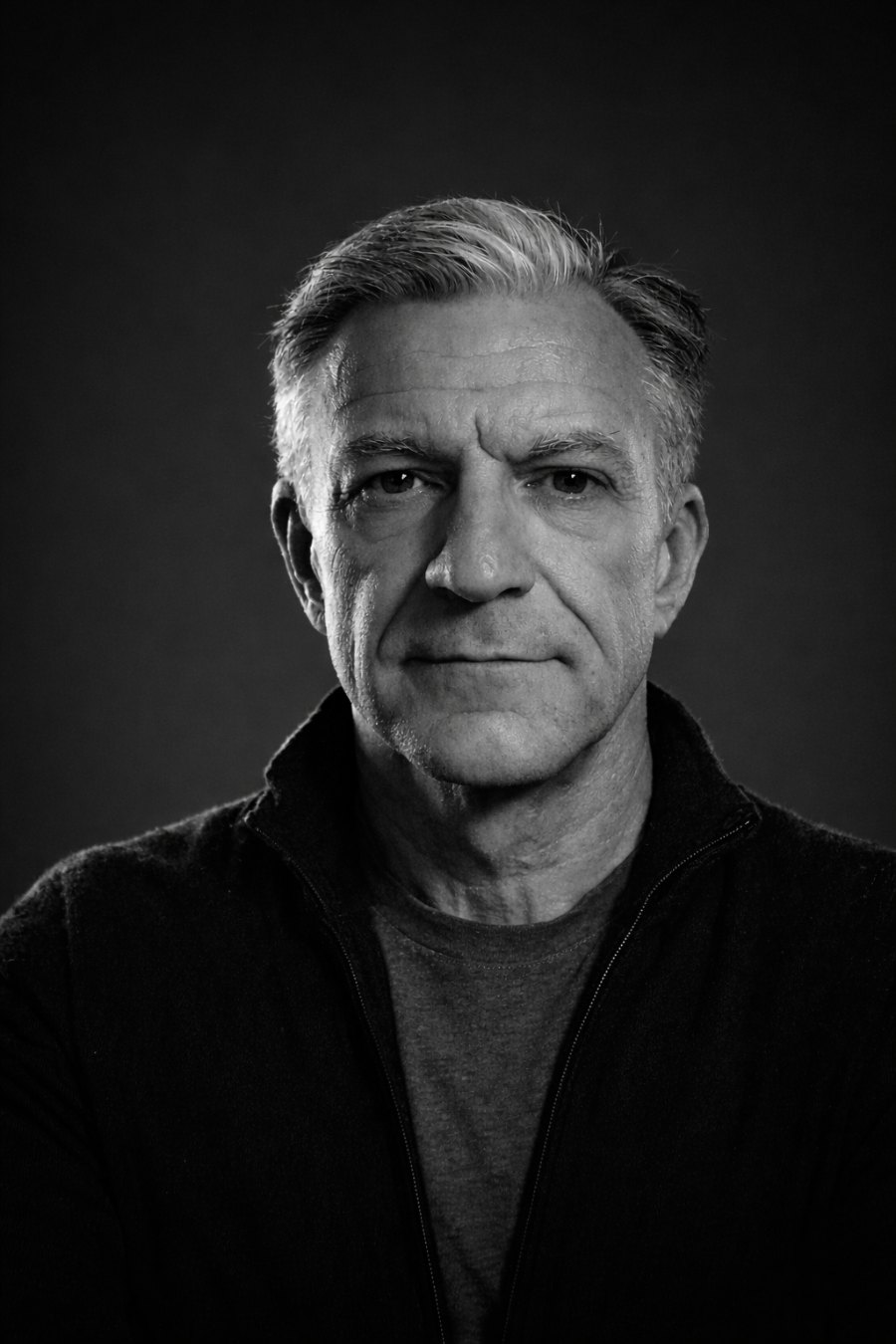
Chief Operating Officer, Universal Technical Institute
Todd A. Hitchcock is Chief Operating Officer of Universal Technical Institute and a recognized leader in higher education, workforce development, and education technology. Over a career spanning more than 25 years, he has led large-scale growth, transformation, and innovation initiatives across public and private education organizations.
Prior to UTI, Todd served in senior executive roles with Pearson and Florida Virtual School, including Chief Operating Officer of Pearson Embanet, Senior Vice President of Pearson Learning Solutions, and Vice President of Global Services at Florida Virtual School. He is the founder of Red Leaf Advising and has served on the boards of the United States Distance Learning Association and the International Council for Online Learning.
Todd writes and speaks on leadership, strategy, workforce readiness, and the future of education.
This paper is the start of a conversation, not the end of one. I'd like to hear where you land.